What Is a Women’s Helmet and Why Is It Important?
A helmet for women is protective headgear for female riders on motorcycles and scooters. It does the same essential job as any motorcycle helmet: helping protect your head in a fall or collision and staying securely in place.
What makes one right for you is not the label but the details: a proper fit, suitable coverage, secure fastening, comfort over a full ride, and a design that suits where you ride, from city commutes to highway stretches. This guide explains what to look for and how to compare the options in RYDR’s women's helmet collection.
Understanding Helmets for Women
Choose a helmet by your head size, head shape, fit, coverage, and riding needs, not by whether it is marketed toward women. Many helmets suit both men and women. Compare:
- Head circumference and size: measured, not guessed
- Weight: lighter is easier on longer rides
- Internal padding: comfortable, without pressure points
- Chin strap: secure and adjustable
- Visibility: a clear view ahead and to the sides
- Ventilation: airflow in warm weather
- Eyewear compatibility: room for glasses
- Hairstyle and hair volume: space for how you wear your hair
Types of Helmets for Women
Helmets differ mainly in how much of the head and face they cover.
Full-Face Helmets for Women
A full-face helmet covers the head, chin, and face. It offers the most coverage, which suits highways, longer journeys and changing weather.
Half-Face Helmets for Women
A half-face helmet, often called an open-face helmet, covers the top, sides and back of the head, including the ears, and leaves the face open. It offers a wide field of view and good airflow, which suits short city rides. The face and chin stay exposed.
Flip-Up or Modular Helmets for Women
A flip-up helmet has a full-face shell with a chin section that lifts away from the face, which is convenient when you stop often. Follow the manufacturer’s instructions on when it can be raised.
How to Choose the Right Helmet for Women
When choosing a helmet for women, start with your riding routine, then compare:
- Correct size: based on your head measurement
- Head shape and fit: snug, level, and stable
- Helmet type: full-face, half-face or flip-up
- Coverage: how much of the head and face is protected
- Weight and inner padding: comfortable over a full ride
- Chin strap: secure and adjustable
- Ventilation and visor: airflow and a clear view
- Safety certification: the ISI mark [IS 4151] for motorcycle helmets
- Glasses and hairstyle: compatibility with how you ride
How to Find the Right Fit for a Women’s Helmet
Use your actual head measurement, not your usual cap or helmet size.
- Measure your head. Wrap a flexible tape around the widest part, about 2–3 cm above your eyebrows, keeping it level.
- Measure again to confirm the reading.
- Match it to the size guide. For example, 57–58 cm corresponds to size M on RYDR’s size guide.
- Try it on before riding. Fasten the strap and gently move your head. The helmet should not wobble or slide.
- Check for pressure. Forehead, temples, and cheeks should feel snug, not sore. Wear it for a while, as pressure points take time to show.
Female Helmet Fit and Comfort Considerations
Whether you call it a female helmet or simply a helmet that suits you, fit is individual. These points vary from rider to rider, not between male and female riders.
- Long hair, ponytails and braids: try the helmet with your usual style; high buns and tight ponytails can push it out of position.
- Hair volume: thick hair adds bulk, so check the helmet still sits level.
- Glasses: put the helmet on first, then your glasses, and check for pressure at the temples.
- Forehead and temple pressure: persistent pressure suggests the shape doesn’t suit your head.
- Cheek pads: they should touch gently, not squeeze.
- Weight: a heavy helmet tires you on longer commutes.
Head shape and individual fit matter more than a “women’s” label.
What to Look for in a Ladies Helmet
A ladies helmet should be judged on the same fundamentals as any other helmet:
- Strong outer shell: sturdy and well finished
- Protective EPS lining: an impact-absorbing layer inside the shell
- Secure retention system: a strap and buckle that fasten firmly
- Comfortable inner padding: soft, breathable, ideally removable
- Ventilation: vents that keep air moving
- Visor or shield: clear and easy to operate
- Coverage: matched to your riding
- Size options: one that fits your measurements
- Certification: IS 4151:2015 is the Indian Standard for motorcycle helmets. Look for the BIS Standard Mark (ISI mark) on the helmet.
Choosing a Helmet Based on Your Riding Needs
- Daily scooter commuting: a lightweight, well-ventilated half-face helmet suits short, stop-and-go rides.
- Motorcycle city riding: consider fuller coverage and a visor.
- Longer journeys: weight, ventilation, and fit matter more over hours; full-face and flip-up designs are common choices.
- Office or college commuting: pick a helmet that works with your hair and glasses.
How RYDR Women’s Helmets Fit Different Riding Needs
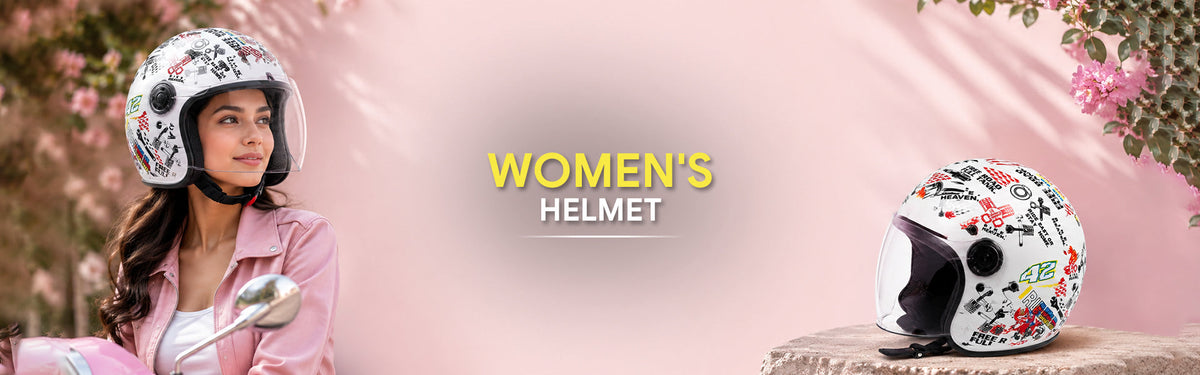
RYDR’s women's helmet collection is built around everyday two-wheeler riding. It includes the Doodle helmet, a half-face helmet with a white finish and doodle-inspired graphics. Its open-face design gives a wide field of vision for city and scooter rides, with a lightweight shell, soft inner padding, and a ventilated build. It is listed as ISI-certified, and the size guide runs from XS to XXL (53–64 cm).
Many RYDR helmets are suitable for both men and women, so you can also explore full-face and flip-up designs in the men’s helmet collection. The same fit guidance applies whichever you choose. Check each model’s size guide, features, and certification details before you order.
Helmet Safety and Proper Use for Women Riders
- Choose the correct size using the size guide.
- Position it correctly: level on your head, not tilted back.
- Fasten the chin strap on every ride, snug but comfortable.
- Check stability: gentle head movements should not shift the helmet.
- Inspect it regularly and follow the manufacturer’s instructions.
- Replace it after a significant impact or when replacement is recommended.
How to Clean and Maintain a Women’s Helmet
- Outer shell: wipe with a soft cloth, mild soap, and water.
- Inner padding: clean removable padding as the manufacturer instructs and let it dry fully.
- Chin strap: wipe gently and check for fraying.
- Visor and vents: use a soft, damp cloth or brush to avoid scratches.
- Storage: keep it cool and dry; avoid harsh chemicals.
When Should You Replace a Helmet?
Replace your helmet after any significant impact, even if no damage is visible, and when you notice damage, worn straps, deteriorated padding, or a changed fit. Follow the manufacturer’s guidance. RYDR recommends replacing helmets every 2–3 years, depending on type and frequency of use, and sooner after a significant impact.
Explore Women Helmets at RYDR
Explore the RYDR women helmet collection, check sizes and product details, and choose the style that fits your head and your ride. Orders ship free, with easy 7-day returns.