
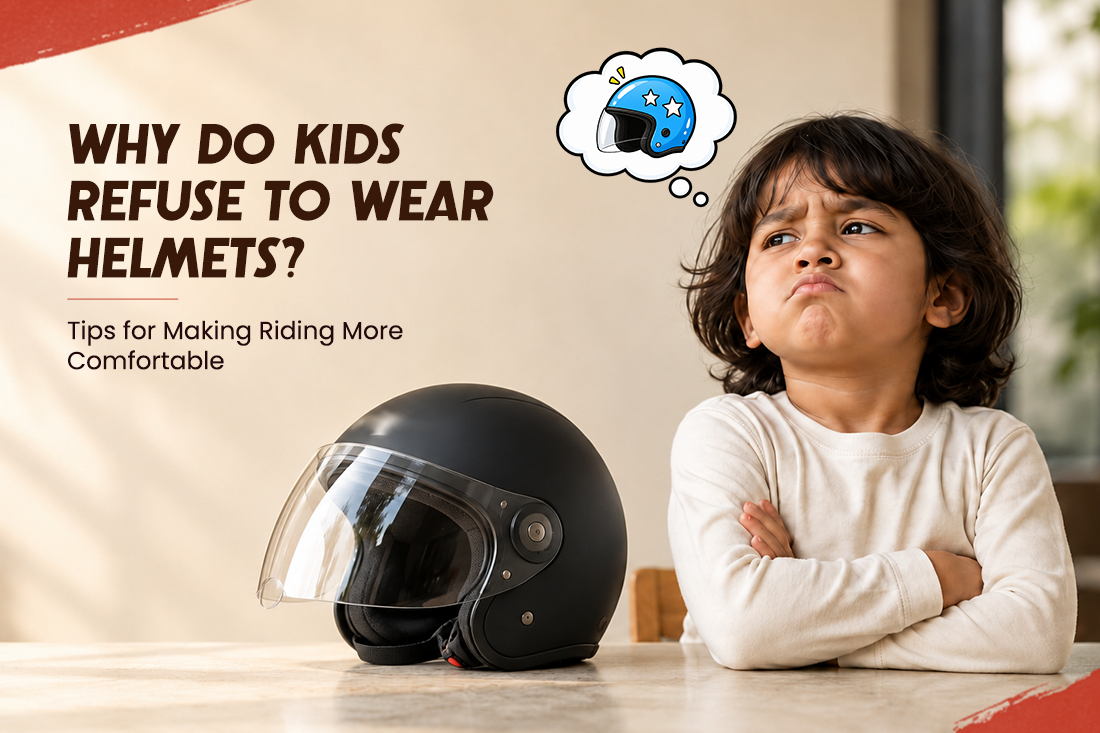
Getting a child ready for a ride can become frustrating when they refuse to wear a helmet. Some children pull it off repeatedly, while others start protesting as soon as they see it.
The reaction may seem like stubbornness, but there could be a specific reason behind it. Understanding that reason helps parents respond more effectively instead of turning every journey into an argument.
Why Do Kids Refuse to Wear Helmets?
1. The Helmet Feels Uncomfortable
A helmet that presses against the forehead, rubs the ears or irritates the skin can make a child reluctant to wear it. A helmet that feels too heavy can also strain a young child's neck.
Young children can often tell you something hurts but may struggle to say where or why, so they might pull at the straps or keep trying to remove it.
If the complaints begin immediately after putting the helmet on, physical discomfort is worth investigating first.
2. They Feel Hot During the Journey
A child who feels sweaty or stuffy beneath a helmet may associate wearing it with feeling overheated. This can become more noticeable during hot weather or when traffic slows the journey.
The child may not object to the helmet itself. They may simply dislike how they feel after wearing it for several minutes.
3. The Helmet Makes Them Feel Restricted
Children are used to moving their heads freely. A helmet can feel unfamiliar because it changes how their head feels and moves, particularly when they have only recently started wearing one.
Some children need time to get used to this sensation. Others may be uncomfortable because the helmet shifts, sits incorrectly, or interferes with their field of view.
Additionally, some children are also more sensitive to textures and pressure, which can make a snug helmet feel worse.
4. They Don't Understand Why They Need One
Children often find it difficult to understand risks they have never experienced themselves. If they have never witnessed an accident, they may see a helmet as an unnecessary inconvenience.
This can lead to questions such as, “Why do I have to wear it?” or “Can I take it off just this once?”
5. They Want to Make Their Own Decisions
As children grow, they begin asserting their independence. Being told what to wear without understanding the reason can trigger resistance, especially when they are already tired or in a hurry.
Refusing the helmet may become a way to challenge the instruction rather than a response to the helmet itself.
6. They Are Influenced by Friends or Siblings
Children pay attention to what others around them do. If their friends or older siblings travel without helmets, they may question why the rule applies to them.
Older children may also worry about how they look. A helmet they consider unattractive or embarrassing can become another reason to refuse it.
How Can Parents Make Wearing a Helmet Easier?
Once you understand what is causing the resistance, you can address it without compromising safety. The following steps focus on different problems, so you can choose the approach that fits your child's situation.
1. Identify and Fix the Source of Discomfort
Don't dismiss complaints as fussiness. Ask your child where the helmet feels uncomfortable, then inspect the fit, lining and straps.
Measure their head and compare it with the manufacturer's size chart. Check for pressure around the forehead, rubbing near the ears or straps that dig into the skin. Look for buckles that pinch or straps that snag their hair. Follow the manufacturer's fitting instructions, and never buy a larger helmet for your child to grow into.
A properly fitted kids helmet should remain secure without causing painful pressure. If discomfort continues, have the fit assessed before the next ride.
If your child also struggles with hats, clothing textures or other sensations, sensory sensitivity may be contributing to the refusal. A paediatric occupational therapist can help you understand and address these difficulties.
2. Help Them Get Used to Wearing It
If your child finds the helmet unfamiliar, introduce it when you're not rushing to leave. Let them try it on at home, look in the mirror and ask questions about how it feels.
Keep these first introductions brief and relaxed. The aim is to make the helmet familiar, not to force the child to tolerate discomfort.
Start the habit from your child's first ride whenever possible. Wearing a helmet from the beginning can help make it a familiar part of getting ready, rather than a rule introduced later.
3. Explain the Reason Behind the Rule
Instead of repeating “because I said so,” explain that a helmet helps protect their head if a fall or collision occurs.
For children four and above, wearing a BIS-certified helmet on a two-wheeler is also a legal requirement, so it isn't just your rule.
Use simple examples that suit their age. Avoid frightening stories or exaggerated warnings, which may create anxiety without helping them understand the purpose of the rule.
Parents can reinforce the message by wearing their own helmets consistently. Children often learn more from what adults do than from what they say.
4. Give Them Choices Where Possible
Allow your child to choose between suitable colours or designs. This gives them some control over the decision while keeping safety requirements non-negotiable.
When comparing kids helmets, prioritise correct sizing, secure fastening and suitability for the intended activity. Appearance should come after these essentials.
5. Remove the Rush Before a Journey
If getting ready regularly turns into an argument, start preparing earlier. Keep the helmet accessible and make putting it on part of the departure routine.
This avoids introducing another source of stress when everyone is already in a hurry. If your child refuses, stay calm and address the concern rather than turning the moment into a contest of wills.
6. Respond to Peer Pressure Without Comparisons
If your child says their friends don't wear helmets, acknowledge what they've noticed without criticising the other children.
Explain that different families may make different choices, but your family follows its own safety rules. If appearance is the concern, let your child help choose a suitable design rather than dismissing their feelings.
Choosing a Helmet That Suits Your Child
Children travelling as motorcycle passengers in India need a helmet certified for that use. Don’t assume a cycling helmet qualifies just because it fits comfortably. Check its intended use and certification first.
For children aged 9 months to four years, the rules allow certain certified bicycle-type helmets, so check the current requirement. Also, children under four also need a safety harness.
RYDR offers childrens helmet designs through its kids helmets collection. Before purchasing, check each product's intended use and certification to ensure it is suitable for your child's journey.
Final Thoughts
A child's refusal to wear a helmet can have several causes, from physical discomfort to a desire for independence. Identifying the reason makes it easier to respond calmly and effectively.
Check the fit, explain the purpose, and involve your child in choosing a suitable kids' helmet. With a consistent approach, wearing one can become a normal part of getting ready for a ride.


Leave a comment
This site is protected by hCaptcha and the hCaptcha Privacy Policy and Terms of Service apply.