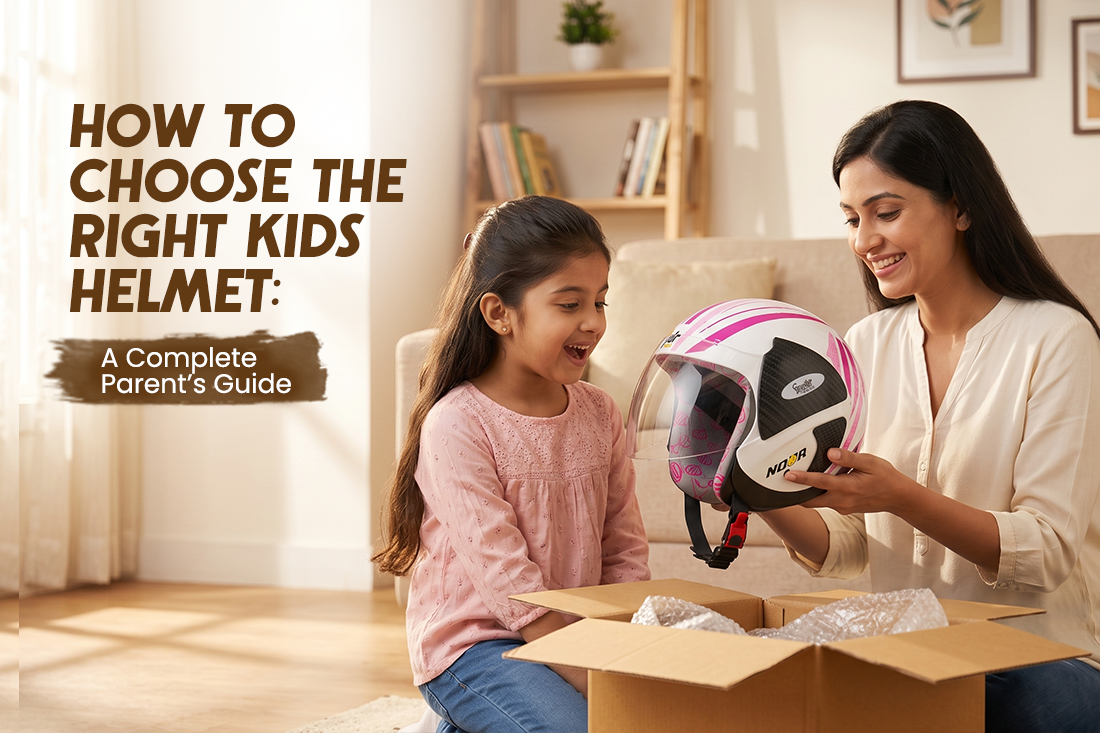
When your child rides on a two-wheeler, the helmet is not just another riding accessory. It needs to fit properly, stay secure, and suit the child’s age and use.
Parents often start with colour, graphics, or price. Those things matter, but fit, certification and construction should come first.
Choose a Helmet Made for Two-Wheeler Use
The first question is simple: what will your child use the helmet for?
If your child rides as a pillion on a motorcycle or scooter, choose a helmet intended for two-wheeler use. Do not assume a cycling helmet provides the same protection or meets the same standard.
If you are searching online using terms such as “childrens bike helmets ”, check the product description carefully. Intended use and applicable certification matter more than appearance.
For Indian two-wheeler use, IS 4151:2015 is the Indian Standard for protective helmets for motorcycle riders. BIS requirements cover areas including the shell, protective padding, retention system, visor, peripheral vision, and impact performance.
Measure Your Child’s Head Before Choosing a Size
Children grow quickly, which can make buying a larger helmet seem sensible.
Avoid choosing a size your child can “grow into”. A helmet should fit the child’s head properly at the time of use.
Measure the head circumference according to the manufacturer’s instructions. Then compare it with the helmet’s size chart.
Look at the Helmet’s Construction and Coverage
Once the fit and retention system are right, look at how the helmet is built and how it covers the head.
Check the Coverage
Fit and coverage are not the same.
The helmet should provide appropriate coverage around the areas it is designed to protect. It should sit in the intended position without unnecessary gaps.
For online purchases, check product photographs from different angles. This gives you a better idea of how the helmet is designed to cover the head.
Check the Outer Shell
The outer shell forms the helmet’s first protective structure.
Look for a clearly stated shell material and information about the helmet’s construction and testing.
ABS is commonly used in motorcycle helmet shells, but the material alone should not determine your choice. Certification and overall construction matter more.
Check the Inner Protective Layer
Check what the manufacturer states about the protective layer inside.
Expanded polystyrene, or EPS, is commonly used as an impact-absorbing material in motorcycle helmets. Do not assume a helmet contains EPS. Check the product specifications before buying.
Look at the Protective Padding
Padding contributes to fit and comfort.
Check whether it sits evenly around the head and whether it can be removed or cleaned when the product allows it.
Regular cleaning also matters because sweat and dust can build up with everyday use.
Check the Visor and Visibility
If the helmet has a visor, check that your child can see clearly through it.
Look for scratches, distortion, or damage. If it opens and closes, check that it operates smoothly.
When buying online, inspect close-up product photographs instead of relying only on the main product image.
Check the Fit and Retention System
A correctly sized helmet should sit securely without excessive movement. It should stay level when your child turns their head and should not tip noticeably backward or forward.
The chin strap should sit comfortably and remain secure when fastened. Look for an adjustable strap and a buckle that parents can operate easily.
BIS’s IS 4151 testing includes retention, chin-strap micro-slip and abrasion tests, along with checks for inadvertent release and quick-release mechanism performance.
Check the Helmet’s Weight
Weight can affect comfort during longer rides.
Check the stated weight alongside the helmet’s size, fit, and construction. A lighter specification alone does not determine whether a helmet will feel comfortable on your child.
Pay Attention to Interior Comfort and Hygiene
The helmet sits directly against the child’s head and face.
Look for comfortable padding and easy-to-maintain materials. Washable or removable padding makes regular cleaning easier.
A comfortable, clean interior can also make children more willing to wear their helmet consistently.
Know the Rules for Young Children on Two-Wheelers
Parents carrying young children on two-wheelers should also know the specific requirements under Indian motor vehicle rules.
MoRTH’s 2022 notification states that a child pillion passenger aged between nine months and four years must wear their own crash helmet that fits their head. It also specifies a safety harness and limits the motorcycle speed to 40 kmph when carrying a child up to four years old.
The notification specifies that the safety harness should be lightweight, adjustable, waterproof, and durable, with cushioning and capacity to hold weight up to 30 kg.
This legal requirement applies from 9 months old. RYDR's kids' helmets are designed for children aged 3 and above, so parents of a child younger than 3 should look for a helmet specifically sized and certified for that younger age group.
Add a Safety Harness for Younger Children
For children below four years travelling as a pillion, a helmet is not the only safety measure to consider.
The Central Motor Vehicles (Second Amendment) Rules, 2022 require a safety harness to attach the child to the motorcycle driver. The Gazette describes the harness as an adjustable vest with straps that help secure the child’s upper torso to the driver.
The specified harness requirements include being lightweight, adjustable, waterproof, and durable. It should also use suitable nylon material with cushioning and be designed to hold up to 30 kg.
RYDR’s Safety Belts are designed around this need, with a child-friendly harness design that helps keep young passengers securely connected to the rider during the journey.
For children below four travelling on a two-wheeler, pairing the right-sized helmet with an appropriate safety harness adds another important layer of protection.
Note: RYDR's harness is designed for children aged 2 and above, so for a child younger than 2, look for a harness specifically designed for that younger range.
Why RYDR Kids Can Be a Practical Option
For parents looking for a two-wheeler helmet for kids, RYDR Kids brings together features focused on protection, fit, and everyday comfort.
Across the range, helmets share a common design approach:
- ABS outer shell & impact-resistant construction: Built with an ABS outer shell and impact-resistant, crash-tested construction
- ISI mark and certification details: The helmet features an ISI mark along with certification details.
- 800 g weight: Designed with a stated weight of 800 g.
- Polycarbonate visor: Features optical-grade clarity along with UV protection and a scratch-resistant surface.
- EPS inner liner: Features an EPS impact-absorbing liner designed to help manage impact energy.
- Comfortable & washable interior: Includes soft-fabric padding, extra cushioning, antibacterial lining, and washable interior padding.
- Adjustable quick-release strap: Comes with a durable nylon chin strap, adjustable belt length, and a one-hand quick-release mechanism.
Together, these features make RYDR Kids a practical option for parents who want a child-sized helmet without overlooking everyday comfort and usability.
There are two options for kids aged 3 to 8 years: URA Star S & Star S Peak. And for kids aged 7 to 14 years, you can find Bloom Dot. All three variants come in both Blue & Pink colour variants.
If your child falls in the 7–8 age range where these overlap, base the choice on their measured head size rather than age alone — check both size charts before deciding.
Buying a Kids Helmet Online? Check These Before You Order
Before ordering, check:
- Whether the helmet is intended for two-wheeler use
- Your child’s current head circumference
- The manufacturer’s size chart
- The applicable Indian Standard and certification details
- Construction and stated weight
- The retention system and buckle
- Padding and care instructions
- Visor and visibility features
Do not choose a helmet only because your child likes the design. Check that the specifications suit the riding situation first.
When Should You Replace a Child’s Helmet?
Replace a helmet after a significant impact, even when there is no obvious external damage.
Also inspect it for cracks, damaged straps, deteriorating padding or changes in fit. If your child has outgrown it, replace it with the correct size.
FAQs
1. What should I look for in a kids helmet for two-wheeler use?
Start with the correct size, applicable certification, secure retention system and suitable construction. Comfort and visibility also matter.
2. How do I know what size helmet my child needs?
Measure your child’s head circumference and compare it with the manufacturer’s size chart. Do not choose a larger size simply because your child is growing.
3. Can my child wear a bicycle helmet on a two-wheeler?
Do not assume that a bicycle helmet is suitable for two-wheeler use. Check the applicable rules and the helmet’s intended certification first.
4. What should I check when buying a kids helmet online?
Check the intended use, size, certification, construction, retention system, weight and product specifications before ordering.
5. When should I replace my child’s helmet?
Replace it after a significant impact or when it becomes damaged, no longer fits properly, or reaches the replacement period recommended by the manufacturer.
The Right Helmet Starts With the Right Fit
Choosing a child’s helmet becomes easier when you know what to check.
Start with two-wheeler suitability. Measure the head, verify the certification and check the retention system. Then consider comfort, visibility and everyday practicality.
The right choice is one that fits properly, stays secure and is suitable for the ride.

Leave a comment
This site is protected by hCaptcha and the hCaptcha Privacy Policy and Terms of Service apply.