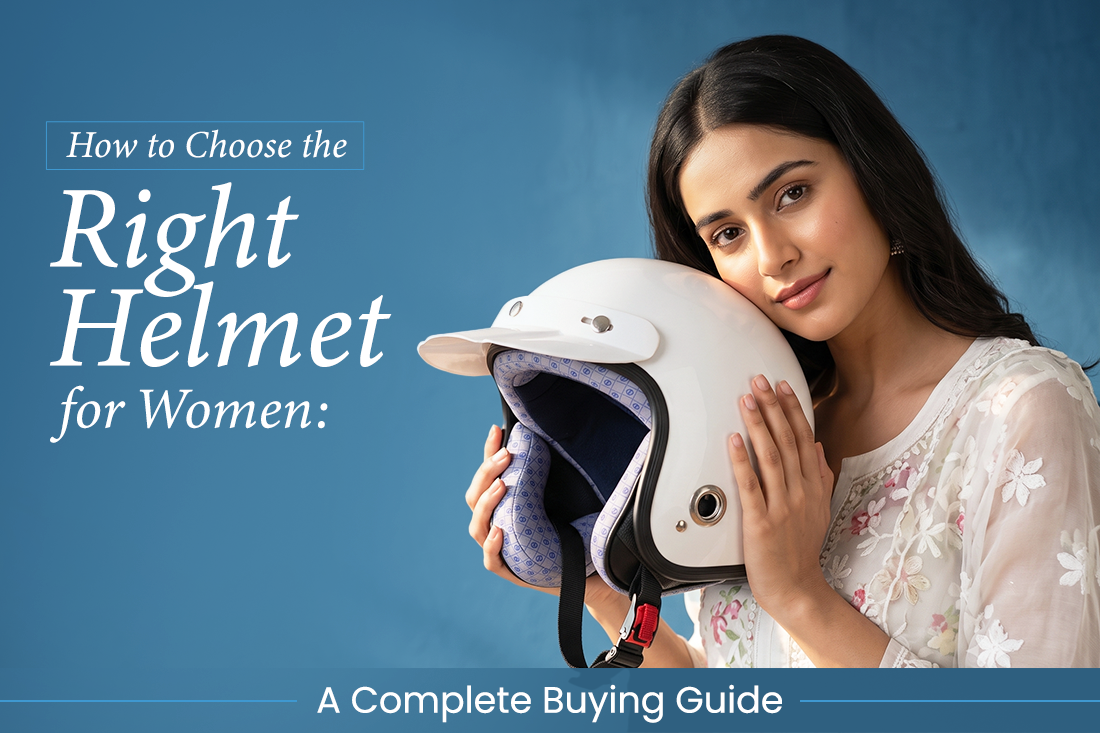
Buying a helmet should not start with a colour, graphic or the word “women” on the box. If you ride a scooter to college, commute to work every day or take your bike out for longer rides on weekends, the right helmet is the one that fits securely and works with the way you actually ride.
For women riders, a few everyday details can make a surprisingly big difference too. Your hairstyle, glasses, helmet weight, and how comfortable the padding feels after 30 minutes on the road all deserve a place in the buying decision.
Here's how to choose one without getting lost in the options.
Why the Right Helmet Fit Matters
A helmet that looks great but moves around on your head is not a good fit. Similarly, choosing a smaller size just because you want a snugger helmet can leave you with painful pressure points.
The goal is simple: the helmet should sit level on your head, feel snug without causing pain and stay stable when you move your head. Your cheeks should feel supported, while the helmet itself should not wobble or shift independently.
And don't assume a helmet needs to be labelled specifically for women to be right for you. Head shape and individual fit matter more than colour, graphics or marketing.
How to Measure Your Head for the Right Helmet Size
Start with a flexible measuring tape. Wrap it around your head at the widest point, generally just above your eyebrows and around the back of your head.
Keep the tape level and comfortably snug, without pulling it tightly. Take the measurement in centimetres or millimetres and check it against the helmet brand's size chart.
For the most accurate result:
-
Measure your head two or three times.
-
Make sure the tape stays level around your head.
-
Use your actual measurement instead of guessing from your usual cap or helmet size.
-
If you're between sizes, don't automatically choose the larger one for extra comfort. Use the manufacturer's fit guidance and try the helmet on before making your final decision.
Your measurement gets you into the right size range. But that's only the beginning.
How to Determine the Right Fit With a Helmet Test
Once you've selected your size, try the helmet on and give it a proper fit test. A quick two-minute try-on may not reveal pressure points that become obvious during a longer wear. The reference guidance recommends wearing a new helmet for around 30–45 minutes when possible to properly assess comfort and fit.
The Snugness Check
Put the helmet on and make sure it sits level rather than tilted backwards. It should feel snug all around, with the cheek pads making gentle contact with your cheeks.
You should not feel sharp pressure on your forehead, temples or the back of your head. If the helmet slides on with almost no resistance, it may be too large. If putting it on causes immediate pain or excessive pressure, try another size or fit.
The Movement Check
Fasten the chin strap and gently move your head from side to side and up and down.
The helmet should stay securely in place and move with your head. If it wobbles, rotates freely or shifts independently when you move, the fit needs attention.
The Strap Test
Fasten the chin strap securely under your chin. It should feel comfortably snug without being painfully tight.
The strap is not just another feature to check off your list. BIS's IS 4151:2015 requirements include testing of the helmet's retention system and chin strap, highlighting its role in keeping the helmet securely positioned.
Choose the Right Helmet Type for Your Ride
The right helmet also depends on what your typical ride looks like.
-
Half helmet for women can work well for everyday city and scooter commuting, especially when easy visibility, airflow, and convenience are priorities. RYDR's Doodle Half-Face Helmet is one such option, which is practical for city riding and shorter trips.
-
Full-face helmets provide more extensive coverage and can be a practical choice for riders who spend more time on highways, take longer rides or simply prefer greater coverage.
-
Modular or flip-up helmets offer another option for riders who want the flexibility of a movable front section, particularly when their riding involves frequent stops.
Think about your actual routine. A helmet that feels perfect for a 15-minute commute may not be the same helmet you'd want for a two-hour weekend ride.
Match the helmet to the ride rather than choosing purely by appearance.
Don't Forget About Hair, Glasses and Comfort
Here's where choosing a helmet can get very personal.
If you normally ride with a ponytail, braid or bun, test the helmet with that hairstyle. A high bun can push the helmet upwards, while a thick braid or ponytail can create pressure against the back of your head. The best hairstyle for riding is the one that lets the helmet sit naturally and securely.
Glasses need a test too. Put the helmet on first, then wear your spectacles or sunglasses. Check whether the arms press against your temples and whether you can comfortably turn your head.
Then consider the things you'll notice every single day:
-
Weight: A lighter helmet can feel easier to manage during regular commuting.
-
Padding: Cheek and crown padding should provide support without creating pressure points.
-
Ventilation: Useful for keeping air moving during hot Indian commutes.
-
Liner: Removable or washable interiors can make regular cleaning easier, particularly if you ride frequently.
BIS's IS 4151:2015 standard also addresses comfort padding and ventilation alongside construction and safety requirements.
Check the Safety Features Before You Buy
Once fit and riding type are sorted, look at the helmet itself.
First, check for the BIS Standard Mark (ISI mark). BIS identifies IS 4151:2015 as the Indian Standard for protective helmets for motorcycle riders, covering construction, performance and testing requirements.
Then check the visor. It should provide a clear, undistorted view and operate smoothly. A visor that is already scratched or difficult to open can become an everyday frustration.
Finally, look at the retention system, padding, ventilation, and overall construction. RYDR's adult helmets are designed with ergonomic padding and optimized airflow to keep riders comfortable during daily commutes and longer rides.
If you often ride early in the morning, after sunset, or in low-light conditions, also consider helmet features that can help make you more noticeable to other road users.
Common Helmet-Buying Mistakes to Avoid
A few mistakes are easy to make when you're excited about a new helmet:
- Buying oversized for comfort: Loose does not mean a better fit.
- Choosing looks before fit: Your favourite colour cannot fix an unstable helmet.
- Ignoring your hairstyle: Test the helmet the way you'll actually wear it.
- Skipping the visor check: Clear vision matters every time you ride.
- Ignoring the chin strap: Make sure it can be secured comfortably and correctly.
- Assuming lighter always means better: Consider weight alongside fit, coverage, construction, and certification.
The best helmet is the one that gets all of these basics right and still feels comfortable enough that you want to wear it every time you ride.
When Should You Replace Your Helmet?
A helmet should be replaced after a serious impact, even if there is no obvious external damage. BIS notes that helmets are designed to absorb impact energy through their components, so damage may not always be immediately visible.
RYDR recommends replacing your helmet every 2–3 years, depending on the kind and frequency of usage. Daily riders who use their helmets extensively may need to replace them sooner, while occasional riders may get longer use from them. You should also replace your helmet if you notice worn padding, strap problems, shell damage or other signs of deterioration.
The same rule applies after a significant crash or impact: don't keep using a helmet simply because it still looks fine.
FAQs
1. What should I look for when buying a helmet for women?
Look for the right size and fit first, followed by BIS/ISI certification, suitable coverage, clear visibility and comfort with your usual hair and eyewear.
2. How do I know if my helmet fits correctly?
It should feel snug without painful pressure points and should remain stable when you gently move your head. Your cheeks should feel supported without excessive discomfort.
3. Is a full-face helmet better than a half-face helmet?
Neither is automatically right for every rider. Choose based on your riding environment, preferred coverage, ride duration and comfort.
4. Can I wear a helmet with a ponytail or braid?
Yes. Just make sure your hairstyle does not lift the helmet or create uncomfortable pressure points. It's best to test the helmet with the hairstyle you normally use while riding.
5. How often should I replace my helmet?
RYDR recommends replacing your helmet every 2–3 years, depending on the kind and frequency of usage. Replace it immediately after a significant impact, even if there is no visible damage.
Your helmet should fit your ride, not just your outfit. Explore RYDR's range of adult helmets, including open-face, full-face and flip-up options, and find one that matches your everyday riding needs.

Leave a comment
This site is protected by hCaptcha and the hCaptcha Privacy Policy and Terms of Service apply.