When it comes to children's safety, choosing the right helmet is one of the most important decisions parents can make. Whether your child rides a bicycle, scooter, skateboard, or accompanies you on short motorcycle rides, a quality helmet provides essential protection against head injuries and accidents.
Many parents focus only on size or appearance when purchasing a helmet. However, a kids helmet should offer much more than a colorful design. Safety certification, comfort, fit, ventilation, and durability all play a crucial role in ensuring maximum protection.
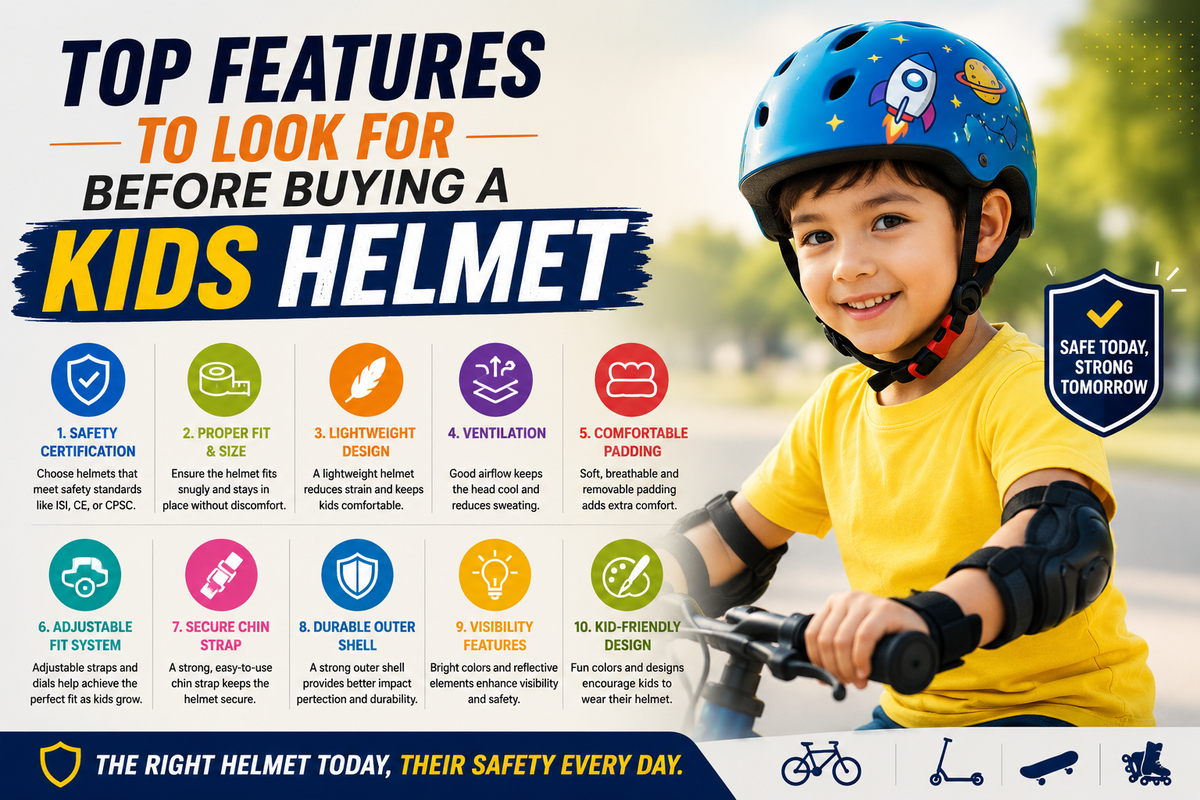
In this guide, we'll explore the top features to look for before buying a kids helmet and help you make an informed decision for your child's safety.
Why a Quality Kids Helmet Matters
Children are naturally active and adventurous. Falls and minor accidents can happen at any time, making head protection essential.
A properly designed kids helmet helps:
- Protect against head injuries
- Absorb impact during falls
- Improve riding confidence
- Encourage safe riding habits
- Provide comfort during outdoor activities
Investing in a quality helmet is a simple yet effective way to keep your child safer while enjoying their favorite activities.
1. Safety Certification Should Be the First Priority
The most important feature of any helmet is safety certification.
Before purchasing, check whether the helmet meets recognized safety standards. Certified helmets undergo testing to ensure they can provide adequate protection during impacts.
A certified helmet gives parents confidence that the product has been designed with child safety in mind.
2. Proper Fit and Sizing
Even the safest helmet cannot protect effectively if it does not fit properly.
A kids helmet should:
- Sit level on the head
- Cover the forehead adequately
- Stay secure without shifting
- Feel snug but comfortable
Many helmets come with adjustable straps and fit systems that allow parents to customize the fit as children grow.
Proper sizing is one of the most important factors when selecting the best kids helmet.
3. Lightweight Design
Children are less likely to wear a helmet consistently if it feels heavy or uncomfortable.
A lightweight helmet offers several advantages:
- Reduced neck strain
- Better comfort during longer use
- Easier movement
- Improved acceptance by children
Modern helmet designs use lightweight materials while maintaining excellent protection.
4. Comfortable Interior Padding
Comfort plays a major role in encouraging children to wear their helmets regularly.
Look for helmets with:
- Soft interior cushioning
- Breathable liners
- Sweat-resistant materials
- Removable and washable padding
Comfortable padding improves the overall wearing experience and helps keep the helmet hygienic.
5. Adjustable Retention System
Children grow quickly, which makes adjustability an important feature.
An adjustable retention system allows parents to:
- Fine-tune the fit
- Improve helmet stability
- Extend helmet usability
- Enhance overall comfort
A secure fit helps the helmet remain properly positioned during activities.
6. Effective Ventilation
Children often spend long periods playing outdoors, especially in warm weather.
A helmet with proper ventilation helps:
- Improve airflow
- Reduce sweating
- Keep the head cool
- Increase comfort during active use
Ventilation systems are particularly important for children who ride regularly.
7. Strong Outer Shell Construction
The outer shell is designed to absorb and distribute impact energy.
A durable shell provides:
- Better impact resistance
- Improved durability
- Long-lasting performance
Quality materials help ensure the helmet continues to offer reliable protection over time.
8. Easy-to-Use Chin Strap
The chin strap keeps the helmet securely in place.
When evaluating a helmet, ensure the strap:
- Is easy to adjust
- Locks securely
- Does not irritate the skin
- Remains comfortable during use
A secure chin strap is essential for maintaining helmet effectiveness during falls or impacts.
9. Bright Colors and Visibility Features
Visibility is an often-overlooked safety feature.
Bright colors and reflective elements help:
- Increase visibility in traffic
- Make children easier to spot
- Improve safety in low-light conditions
Many modern kids helmets include reflective decals and vibrant color options for added visibility.
10. Attractive Design Kids Will Actually Wear
The safest helmet is the one your child wants to wear.
Many kids prefer helmets featuring:
- Fun graphics
- Bright colors
- Modern designs
- Favorite themes
Choosing a design your child likes can encourage consistent helmet use and safer riding habits.
Common Mistakes Parents Make When Buying Kids Helmets
Avoid these common mistakes:
- Buying oversized helmets
- Choosing helmets based only on appearance
- Ignoring safety certification
- Skipping fit adjustments
- Reusing damaged helmets
A properly fitted, certified helmet always provides better protection than a stylish but poorly fitting alternative.
When Should a Kids Helmet Be Replaced?
Parents should replace a helmet if:
- It has been involved in a significant impact
- The shell is cracked or damaged
- Interior padding is worn out
- The fit becomes too small
- Manufacturer replacement guidelines are reached
Regular inspection helps ensure continued protection.
Final Thoughts
Choosing the right kids helmet involves more than simply selecting the right color or size. Parents should prioritize safety certification, proper fit, lightweight construction, comfortable padding, ventilation, and durability.
By focusing on these top features to look for before buying a kids helmet, you can help ensure your child stays protected while enjoying cycling, scootering, skating, and other outdoor activities.
A quality helmet is one of the best investments you can make in your child's safety, confidence, and long-term riding habits.

Leave a comment
This site is protected by hCaptcha and the hCaptcha Privacy Policy and Terms of Service apply.