Choosing the right helmet is essential for every rider. Whether you ride daily in the city or travel on highways, your helmet plays a major role in safety, comfort, and riding experience. Many riders often compare full face vs open face helmet to find the best option.
In this SEO-friendly guide, you’ll understand the key differences, benefits, and which helmet is best for your riding needs.
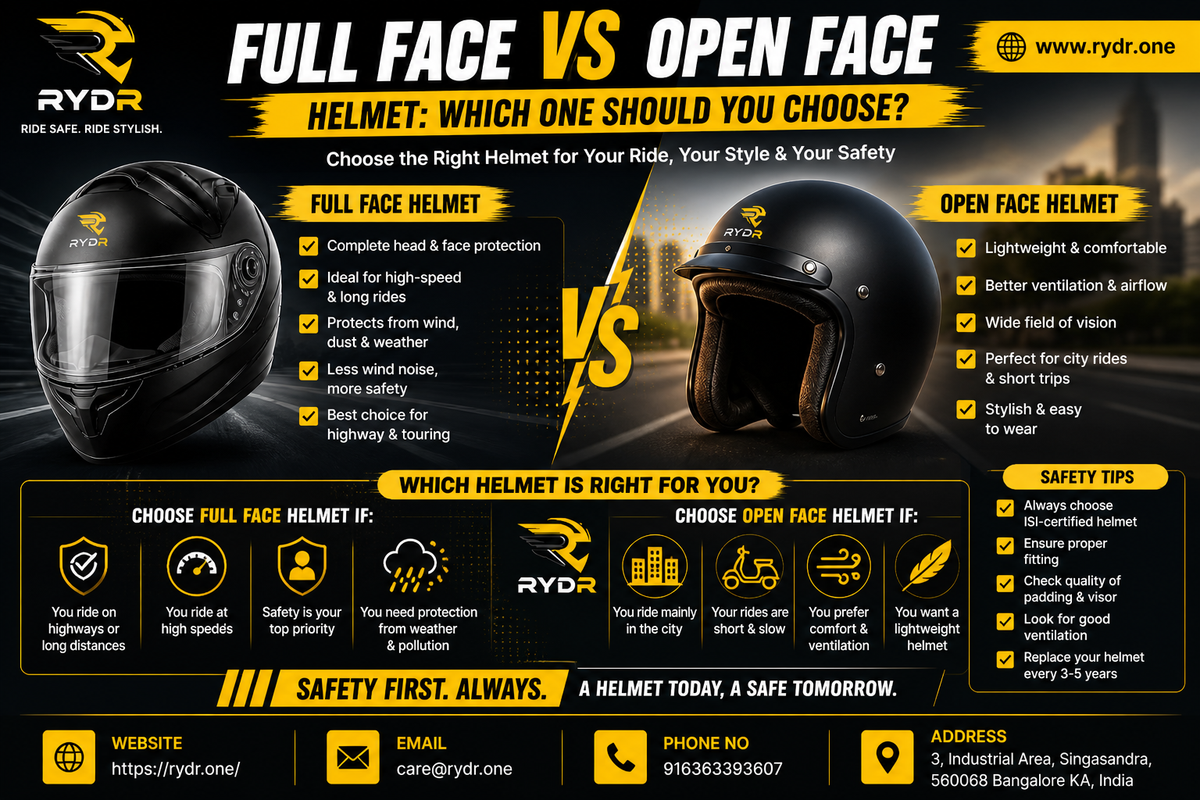
What is a Full Face Helmet?
A full face helmet is designed to cover your entire head, including your chin and jaw. It comes with a visor that protects your face from dust, wind, insects, and harsh weather conditions.
This type of helmet is considered the safest option for riders, especially for high-speed and long-distance rides.
Key Features of Full Face Helmet:
- Covers full head, including chin and jaw
- Comes with a strong visor for face protection
- Built for high-speed riding and highways
- Offers better aerodynamics
Benefits of Full Face Helmet:
- Maximum protection during accidents
- Protects from dust, pollution, and weather
- Reduces wind noise while riding
- Ideal for long rides and touring
Drawbacks of Full Face Helmet:
- Slightly heavier than open face helmets
- Can feel warm in hot weather
- Less airflow compared to open face helmets
What is an Open Face Helmet?
An open face helmet (also called a half helmet) covers the top and sides of your head but leaves your face open. It is commonly used for city riding and short-distance travel.
Key Features of Open Face Helmet:
- Covers head but not the face
- Lightweight and comfortable
- Wide field of vision
- Easy to wear and remove
Benefits of Open Face Helmet:
- Better ventilation and airflow
- Lightweight design for daily use
- Comfortable for short rides
- Stylish and popular among city riders
Drawbacks of Open Face Helmet:
- No protection for chin and face
- Less safety during accidents
- Exposure to dust, wind, and pollution
- More external noise while riding
Full Face vs Open Face Helmet: Key Differences
Understanding the difference between full face and open face helmets helps you make the right decision.
Main Differences:
- Full face helmet offers complete protection, while open face leaves your face exposed
- Full face is safer for high-speed riding, open face is better for city commuting
- Full face reduces wind noise, open face allows more airflow
- Open face helmets are lighter, but full face helmets are more secure
Which Helmet Should You Choose?
Your choice depends on your riding style and safety priorities.
Choose Full Face Helmet If:
- You ride on highways or long distances
- You want maximum safety
- You ride at high speeds
- You need protection from weather and dust
Choose Open Face Helmet If:
- You ride mainly in the city
- Your rides are short and slow
- You prefer comfort and ventilation
- You want a lightweight helmet
Important Helmet Safety Tips
Before buying a helmet, always focus on safety and quality.
Must-Follow Tips:
- Always choose an ISI-certified helmet
- Ensure proper fitting (not too tight or loose)
- Check inner padding and comfort
- Look for good ventilation system
- Replace helmet after 3–5 years
Final Verdict
When comparing full face vs open face helmet, the decision depends on your needs. However, in terms of safety, full face helmets are always the better option. They provide complete protection and are ideal for serious riders.
Open face helmets are suitable for comfort and short rides, but they lack full protection.
Final Recommendation:
- For safety → Full Face Helmet
- For comfort → Open Face Helmet
Choosing the right helmet is not just about style—it’s about protecting your life. Always invest in a high-quality helmet that suits your riding needs and keeps you safe on every ride.


Leave a comment
This site is protected by hCaptcha and the hCaptcha Privacy Policy and Terms of Service apply.